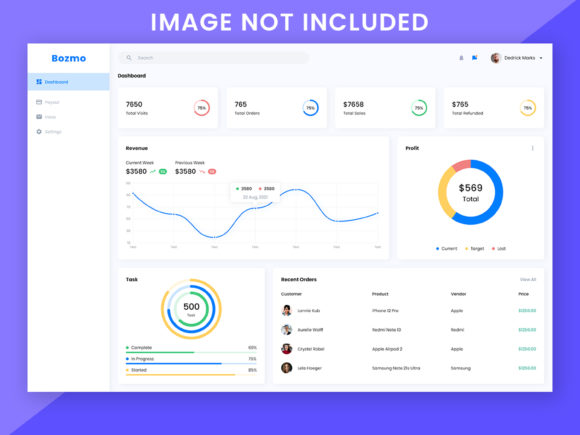
Bozmo Admin Dashboard: A Modern Solution for Streamlined Administration
In the digital age, efficient management of online platforms and applications is crucial for success. One tool that has gained attention for its versatility and user-friendly design is the Bozmo Admin Dashboard. This admin panel offers a robust framework that empowers users to manage various aspects of their digital presence with ease. Whether you're running an e-commerce site, managing a content platform, or overseeing a complex web application, Bozmo provides a structured environment to streamline administrative tasks.
The Bozmo Admin Dashboard is designed with a layered approach, allowing developers and administrators to customize and extend its functionality according to their specific needs. This flexibility makes it an ideal choice for businesses looking to create a tailored admin experience without the complexity of building everything from scratch. Its intuitive interface ensures that even those with limited technical expertise can navigate and manage the dashboard effectively.
Key Features of Bozmo Admin Dashboard
One of the standout features of the Bozmo Admin Dashboard is its modular architecture. This means that different components can be added, removed, or modified based on the requirements of the project. For instance, if you need a section for managing user roles, you can easily integrate that module into the dashboard. Similarly, if your application requires analytics tools, Bozmo allows for seamless integration of such features.
Another notable aspect is the customization options available within the Bozmo Admin Dashboard. Users can personalize the layout, color schemes, and navigation menus to align with their brand identity. This level of customization not only enhances the visual appeal but also improves user experience by making the dashboard more intuitive and aligned with the organization's branding guidelines.
Security is a critical concern for any admin dashboard, and Bozmo addresses this with built-in security measures. From role-based access control to secure authentication protocols, the dashboard ensures that sensitive data and functionalities are protected from unauthorized access. This is particularly important for businesses handling customer information, financial data, or other confidential details.
Use Cases for Bozmo Admin Dashboard
The Bozmo Admin Dashboard finds applications across a wide range of industries and use cases. For example, in the e-commerce sector, it can be used to manage product inventories, track orders, and monitor sales performance. The ability to generate reports and analyze trends helps business owners make informed decisions and optimize their operations.
In the realm of content management, the Bozmo Admin Dashboard serves as a central hub for creating, editing, and publishing content. It allows multiple users to collaborate on content creation while maintaining version control and ensuring consistency across the platform. This is especially beneficial for teams working on large-scale content projects, such as blogs, news websites, or corporate portals.
For software development teams, the Bozmo Admin Dashboard can act as a powerful tool for managing application settings, monitoring system performance, and handling user feedback. Its integration capabilities enable developers to connect it with other tools and services, creating a cohesive ecosystem that supports the entire development lifecycle.
Benefits of Using Bozmo Admin Dashboard
One of the primary benefits of using the Bozmo Admin Dashboard is its time-saving potential. By providing a centralized platform for managing various administrative tasks, it reduces the need for switching between multiple tools and interfaces. This not only increases efficiency but also minimizes the risk of errors that can occur when managing tasks manually.
Another advantage is the scalability offered by the Bozmo Admin Dashboard. As businesses grow and their needs evolve, the dashboard can be expanded to accommodate new features and functionalities. This scalability ensures that the dashboard remains a valuable asset over time, adapting to the changing demands of the organization.
Additionally, the Bozmo Admin Dashboard promotes collaboration among team members. With features such as user roles, permissions, and activity tracking, it enables teams to work together seamlessly while maintaining accountability and transparency. This is particularly useful in environments where multiple stakeholders are involved in the management of a digital platform.
Considerations When Implementing Bozmo Admin Dashboard
While the Bozmo Admin Dashboard offers numerous advantages, there are several considerations to keep in mind during implementation. One of the key factors is the level of technical expertise required. Although the dashboard is designed to be user-friendly, some customization and integration tasks may require a certain degree of technical knowledge. It is advisable to assess the skill set of your team before proceeding with the implementation.
Another consideration is the compatibility of the Bozmo Admin Dashboard with existing systems and technologies. Before integrating it into your workflow, ensure that it can seamlessly interact with your current infrastructure. This includes checking for compatibility with databases, APIs, and other third-party services that your application may rely on.
Furthermore, it is essential to plan for ongoing maintenance and support. While the Bozmo Admin Dashboard is designed to be reliable, regular updates and monitoring are necessary to ensure optimal performance. Establishing a maintenance schedule and identifying support channels can help address any issues that may arise and keep the dashboard running smoothly.
Best Practices for Utilizing Bozmo Admin Dashboard
To get the most out of the Bozmo Admin Dashboard, it is recommended to follow best practices that enhance usability and efficiency. One such practice is to regularly review and update the dashboard’s configuration to reflect changes in your business processes. This ensures that the dashboard remains aligned with your operational needs and continues to provide value.
Another best practice is to leverage the reporting and analytics features of the Bozmo Admin Dashboard. By generating insights from the data collected, you can identify trends, measure performance, and make data-driven decisions. This not only improves decision-making but also helps in optimizing your administrative workflows.
Lastly, fostering a culture of continuous improvement is essential. Encourage users to provide feedback on their experiences with the dashboard and use this input to refine and enhance its functionality. This collaborative approach ensures that the dashboard evolves to meet the changing needs of your organization.