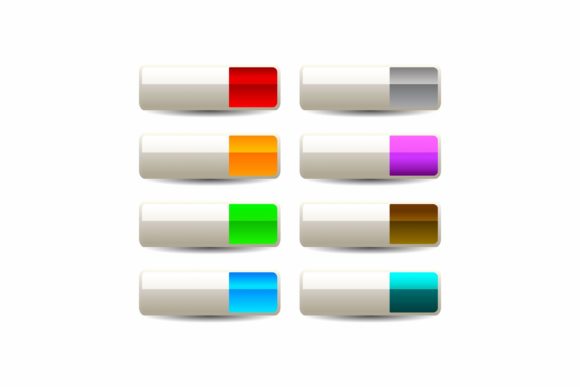
Understanding Web Buttons: A Versatile Tool for Digital Design
Web Buttons is a collection of digital assets designed to enhance the visual appeal and functionality of websites, applications, and other digital projects. These buttons are crafted using vector graphics, ensuring they remain crisp and clear at any size. The key feature that sets Web Buttons apart is its fully editable nature, allowing designers to customize every aspect of the design without compromising quality.
What Makes Web Buttons Unique?
Unlike many pre-designed button kits, Web Buttons offers a high degree of flexibility. Each element is created in Vector EPS format, which means it can be opened and modified in Adobe Illustrator or other vector-based software. This makes it an ideal choice for professionals who need to adjust colors, shapes, or typography to match their brand identity or project requirements.
The collection includes sample previews in JPEG format, giving users a quick look at how the buttons might appear in different contexts. However, the real power lies in the ability to edit individual objects within the design. Every color, shape, and text element is independent, making it easy to tweak the design without affecting other parts of the layout.
Web Buttons also supports RGB color mode, ensuring compatibility with digital displays and web platforms. The files are well-organized, making it simple to locate specific elements and integrate them into larger projects. This level of organization is particularly beneficial for designers working on complex layouts or multiple versions of a design.
Comparing Web Buttons to Other Options
When evaluating digital design tools, it's important to consider the range of options available. Many button libraries come in fixed formats, limiting customization and adaptability. Web Buttons, on the other hand, provides a more open-ended approach, allowing users to tailor each button to their specific needs.
Compared to raster-based designs, which can lose quality when scaled, Web Buttons ensures that every button remains sharp and professional regardless of the size. This is especially useful for responsive web design, where elements must adjust to different screen sizes and resolutions.
Another advantage of Web Buttons is its compatibility with various fonts and shapes. The typography is fully editable, meaning users can change the font style, size, and color without any restrictions. This flexibility makes it suitable for a wide range of design styles, from minimalist interfaces to bold, eye-catching buttons.
While some design resources may offer similar features, Web Buttons stands out for its ease of use and comprehensive file structure. It works seamlessly with the Graphic Style panel in Adobe Illustrator, streamlining the workflow for designers who rely on this tool. This integration reduces the time needed to apply consistent styles across multiple elements, improving efficiency and consistency in the final output.
Best Fit and Limitations
Web Buttons is particularly well-suited for designers who value control and precision in their work. It is ideal for projects that require frequent adjustments, such as branding campaigns, website redesigns, or custom UI elements. Its editable nature also makes it a good choice for teams working on collaborative projects, where different members may need to modify the design independently.
However, it's important to note that Web Buttons does not include font files. This means users must have access to the desired fonts or choose from available system fonts. While this limitation is common in many design resources, it may require additional steps for those who rely on specific typefaces.
For users who prefer a more hands-off approach, Web Buttons may require a higher level of technical skill compared to pre-designed button packs. Those unfamiliar with vector editing software may find the process more involved, though the benefits of customization often outweigh this initial learning curve.
When to Choose Web Buttons
Web Buttons is a strong option for designers who want to maintain creative control over their projects. If a project requires unique visual elements that align with a brand’s identity, this resource can provide the necessary tools to achieve that goal. It is also a good choice for developers or designers working on multi-platform applications, where scalability and adaptability are essential.
For example, a designer working on a mobile app may use Web Buttons to create interactive elements that fit the app’s theme and user experience. Similarly, a marketing team developing a website could leverage the editable features to ensure consistency across different pages and sections.
In contrast, if a project has tight deadlines or limited design resources, a pre-made button set might be more efficient. These alternatives often provide instant results with minimal setup, making them suitable for quick implementations or less complex projects.
Practical Applications and Use Cases
Web Buttons can be used in a variety of settings, from web development to print media. Its high-resolution files make it suitable for both digital and physical outputs, ensuring that the design remains sharp and professional in any format. This versatility is especially valuable for designers who work across multiple mediums.
One practical use case involves creating a cohesive visual language for a company’s online presence. By using Web Buttons, a designer can ensure that all buttons across the website share a consistent style while still allowing for variations based on context or function. This helps reinforce brand recognition and improves user experience.
Another scenario is when a designer needs to quickly prototype a new interface. With Web Buttons, they can experiment with different layouts, colors, and typography without having to start from scratch. This flexibility can save time and allow for more creative exploration during the design process.
Conclusion
Web Buttons offers a powerful combination of flexibility, quality, and usability for digital designers. Its vector-based format and editable features make it a valuable resource for projects that require customization and precision. While it may not be the best choice for every situation, it provides a strong foundation for those who seek control over their design elements.
By understanding the strengths and limitations of Web Buttons, designers can make informed decisions about whether it fits their specific needs. Whether used for web development, branding, or application design, this resource can help bring creative visions to life with clarity and professionalism.